Introduction to the Marrakesh concept
The 2023 Klim Marrakesh represents an incremental refinement of a jacket that many riders already regard as an industry benchmark. Klim maintains a reputation for producing technically rigorous motorcycle apparel, and customer feedback consistently confirms how comfortable and dependable the Marrakesh feels during extended road use.
The updated version preserves its core design philosophy while incorporating targeted improvements such as revised armour, a redesigned collar, and additional colour options. These updates do not alter the foundational purpose of the jacket; instead, they reinforce a system built around airflow, comfort, impact protection, and environmental adaptability.
The jacket continues to function as the cornerstone of a modular layering configuration, which allows riders to maintain thermal stability and weather resistance across a wide temperature range. This article defines the technical principles behind the Marrakesh, explains the engineering decisions that influence real-world performance, and outlines the advantages and limitations of using the Marrakesh as the central component of a structured riding system.
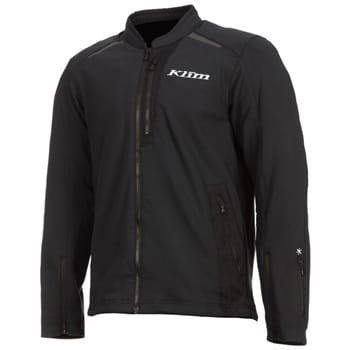
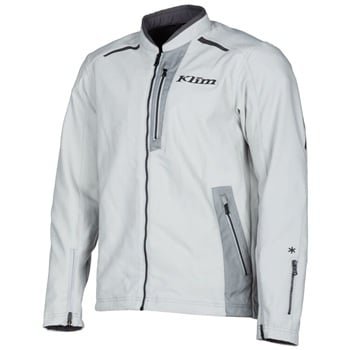
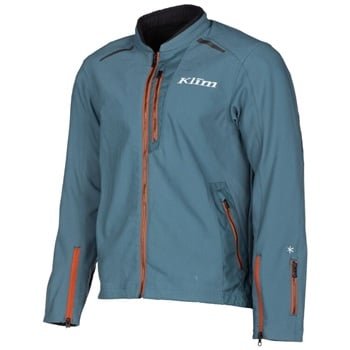
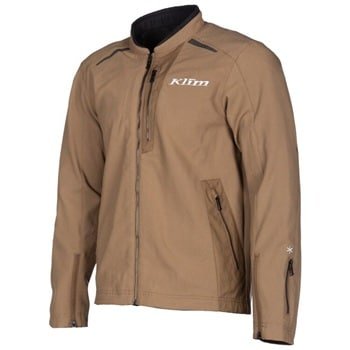
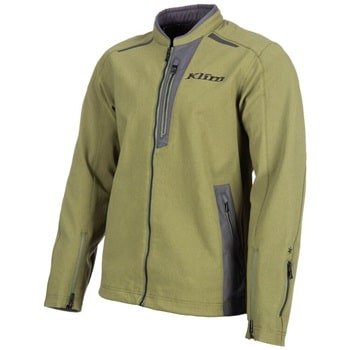
The Klim Marrakesh. What it is.
The Marrakesh belongs to the mesh-jacket category, a segment characterised by lightweight construction and high ventilation. Most mesh jackets rely on conventional Nylon shells with discrete mesh panels, which provide airflow but often compromise abrasion resistance.
By contrast, the Marrakesh utilises a 1000D Karbonite Micromesh Cordura outer fabric with a stretch-woven structure that maintains both airflow and durability. The chassis incorporates full four-way stretch fibres to improve mobility when leaning, steering, or shifting body position.
Klim also applies a DWR coating that sheds light moisture and accelerates surface drying after exposure to brief rain. Because every panel on the jacket is porous, the Marrakesh enables continuous ventilation rather than limiting airflow to selected zones. This approach supports the body’s evaporative cooling process at low and high speeds, and delivers functionality uncommon among typical mesh jackets.
Structural materials and safety certification
Abrasion protection plays a central role in motorcycle apparel engineering, and the Marrakesh’s chassis significantly exceeds the durability standards associated with standard mesh shells. The 1000D Cordura fabric produces a tightly controlled abrasion curve while maintaining flexibility through Elastane stretch fibres.
This combination enables the jacket to achieve a CE AA rating to EN17092-3, which is uncommon among high-airflow garments. Many laminated and Gore-Tex touring jackets from premium manufacturers achieve only A certification, illustrating the balance Klim has struck between ventilation and safety.
The Marrakesh also integrates a moisture-wicking, antimicrobial mesh lining to stabilise interior humidity during continuous airflow. These elements result in a garment that behaves as a hybrid between a mesh jacket and a lightweight textile shell, allowing riders to access high airflow without materially compromising impact and abrasion standards.
Comfort, stretch, and thermal behaviour
The Marrakesh exhibits unusual comfort characteristics because the main chassis behaves more like athletic apparel than traditional motorcycle gear. The four-way stretch allows the jacket to conform to the rider’s torso without restricting movement, which is particularly noticeable when reaching for controls or maintaining a sport-touring posture.
The porous micromesh structure ensures the entire garment flows air, making the jacket suitable for high-temperature conditions but unsuitable for cold-weather use unless supplemented with additional layers. On cool days, the airflow can cause rapid heat loss, requiring the rider to rely on base layers, windproof membranes, or insulating garments.
These thermal dynamics make the Marrakesh highly predictable: it performs optimally in heat and requires planned layering when temperatures drop. As a result, riders experience consistent comfort when the jacket is used within the appropriate temperature band and augmented correctly during colder conditions.
The Marrakesh as part of a system
Although the Marrakesh functions effectively as a standalone mesh jacket, its full utility emerges when used within a defined layering structure. This system approach allows a rider to maintain comfort across wide temperature and weather variations by adding or removing specific layers as needed.
The jacket’s airflow serves as the foundation, while base layers, windproof membranes, insulating down layers, and waterproof shells form successive thermal and environmental barriers. The system reflects practices used in mountaineering and long-distance outdoor travel, where modular layering provides more precise climate regulation than fixed-membrane garments.
Riders who understand and manage these layers can configure the Marrakesh for warm summer rides, cold mountain passes, or variable touring conditions without relying on a single bulky jacket. This flexibility, however, requires occasional stops to adjust clothing, which may not suit commuters or group riders unwilling to pause when conditions change.
Base layers and heat-management fundamentals
Base layers regulate moisture, reduce skin friction, and support thermal balance. Lightweight synthetic or Merino garments perform this function by transferring perspiration away from the skin, enabling evaporative cooling when used under the Marrakesh.
In high-temperature scenarios such as summer touring in southern Europe or desert environments, this combination provides stable comfort because air passes through both the mesh chassis and the base layer. During transitional temperatures, however, the Marrakesh’s airflow becomes excessive, and the body loses heat faster than it can produce it.
At that stage, the rider introduces the next layer in the system: a compact windproof membrane that reduces convective heat loss. This sequential approach ensures that each component addresses a specific thermal requirement without overlapping functions or adding unnecessary bulk.
Windproof layering and the role of the Zephyr
Wind chill significantly accelerates heat loss at speed. At 5°C and 70 mph, the perceived temperature drops to approximately –2°C, and traditional insulating layers cannot prevent this because airflow penetrates them easily.
The Klim Zephyr addresses this by creating a thin but effective windproof barrier beneath the Marrakesh. Its lightweight construction allows the rider to maintain mobility while preventing convective heat loss.
Although the Zephyr is not fully waterproof due to its untaped seams, it can resist light rain for short durations, providing temporary weather protection until a dedicated waterproof shell is added. When used within the system framework, the Zephyr stabilises body temperature during cool spring or autumn rides without obstructing airflow completely, thereby preserving comfort and predictability.
Insulation and down layering
As temperatures drop further, a windproof membrane alone becomes insufficient. The rider must introduce an insulating layer that traps warm air close to the torso.
Down-filled garments meet this requirement due to their high loft-to-weight ratio. Klim’s Maverick down jacket uses a 90:10 duck down and feather blend, producing substantial warmth while remaining compact enough to fit beneath the Marrakesh without restricting movement.
This insulating layer works in conjunction with the Zephyr: the Zephyr blocks wind penetration, while the down jacket retains heat generated by the body. This two-layer combination matches or surpasses the warmth of many winter-oriented motorcycle jackets, while still allowing the rider to remove layers quickly if conditions improve.
Waterproofing with an external shell
When heavy rain develops, neither the Marrakesh nor the Zephyr provides adequate protection. Riders must rely on a dedicated waterproof shell, such as the Scott over-jacket, which uses a breathable and stretchy construction that can be worn close to the body.
Because the Marrakesh has a fully porous structure, the external shell prevents water from reaching the inner layers while avoiding the restricted airflow and stiffness associated with laminated membranes. This separation between abrasion protection and waterproofing improves comfort at high temperatures because the rider only deploys the waterproof layer when necessary.
The system therefore ensures stable performance in rain without requiring a permanently sealed membrane that would compromise airflow during hot-weather riding. The modular method reflects an engineering trade-off: optimal performance in each condition rather than partial performance across all conditions.
Advantages and trade-offs of system layering
System layering provides precise thermal and environmental control, but it requires the rider to adjust layers manually during a journey. Riders must stop to add windproof, insulating, or waterproof layers depending on temperature or weather changes.
For long-distance commuters or riders who prefer uninterrupted travel, this may prove inconvenient. Touring riders, weekend riders, or those travelling in variable climates often value the fine-tuned comfort and adaptability that system layering offers.
Compared with fixed-membrane textile jackets, which remain comfortable only within specific temperature limits, the Marrakesh-based system delivers wider environmental coverage and superior comfort in hot conditions. However, it is not a universal solution, and riders must evaluate their travel patterns before adopting this approach.
Base layers and heat-management fundamentals
Base layers regulate moisture, reduce skin friction, and support thermal balance. Lightweight synthetic or Merino garments perform this function by transferring perspiration away from the skin, enabling evaporative cooling when used under the Marrakesh.
In high-temperature scenarios such as summer touring in southern Europe or desert environments, this combination provides stable comfort because air passes through both the mesh chassis and the base layer. During transitional temperatures, however, the Marrakesh’s airflow becomes excessive, and the body loses heat faster than it can produce it.
At that stage, the rider introduces the next layer in the system: a compact windproof membrane that reduces convective heat loss. This sequential approach ensures that each component addresses a specific thermal requirement without overlapping functions or adding unnecessary bulk.
Windproof layering and the role of the Zephyr
Wind chill significantly accelerates heat loss at speed. At 5°C and 70 mph, the perceived temperature drops to approximately –2°C, and traditional insulating layers cannot prevent this because airflow penetrates them easily.
The Klim Zephyr addresses this by creating a thin but effective windproof barrier beneath the Marrakesh. Its lightweight construction allows the rider to maintain mobility while preventing convective heat loss.
Although the Zephyr is not fully waterproof due to its untaped seams, it can resist light rain for short durations, providing temporary weather protection until a dedicated waterproof shell is added. When used within the system framework, the Zephyr stabilises body temperature during cool spring or autumn rides without obstructing airflow completely, thereby preserving comfort and predictability.
Insulation and down layering
As temperatures drop further, a windproof membrane alone becomes insufficient. The rider must introduce an insulating layer that traps warm air close to the torso.
Down-filled garments meet this requirement due to their high loft-to-weight ratio. Klim’s Maverick down jacket uses a 90:10 duck down and feather blend, producing substantial warmth while remaining compact enough to fit beneath the Marrakesh without restricting movement.
This insulating layer works in conjunction with the Zephyr: the Zephyr blocks wind penetration, while the down jacket retains heat generated by the body. This two-layer combination matches or surpasses the warmth of many winter-oriented motorcycle jackets, while still allowing the rider to remove layers quickly if conditions improve.
Waterproofing with an external shell
When heavy rain develops, neither the Marrakesh nor the Zephyr provides adequate protection. Riders must rely on a dedicated waterproof shell, such as the Scott over-jacket, which uses a breathable and stretchy construction that can be worn close to the body.
Because the Marrakesh has a fully porous structure, the external shell prevents water from reaching the inner layers while avoiding the restricted airflow and stiffness associated with laminated membranes. This separation between abrasion protection and waterproofing improves comfort at high temperatures because the rider only deploys the waterproof layer when necessary.
The system therefore ensures stable performance in rain without requiring a permanently sealed membrane that would compromise airflow during hot-weather riding. The modular method reflects an engineering trade-off: optimal performance in each condition rather than partial performance across all conditions.
Advantages and trade-offs of system layering
System layering provides precise thermal and environmental control, but it requires the rider to adjust layers manually during a journey. Riders must stop to add windproof, insulating, or waterproof layers depending on temperature or weather changes.
For long-distance commuters or riders who prefer uninterrupted travel, this may prove inconvenient. Touring riders, weekend riders, or those travelling in variable climates often value the fine-tuned comfort and adaptability that system layering offers.
Compared with fixed-membrane textile jackets, which remain comfortable only within specific temperature limits, the Marrakesh-based system delivers wider environmental coverage and superior comfort in hot conditions. However, it is not a universal solution, and riders must evaluate their travel patterns before adopting this approach.
Pocket layout, zippers, and structural revisions
The 2023 revision introduces changes to pocket placement, hardware durability, and garment shaping. The external chest pocket count decreases from two to one, but an internal chest pocket becomes more practical for storing documents or small devices.
YKK zippers with Hypalon garages improve reliability and protect zipper heads from abrasion or wind vibration. Non-stretch reinforcement zones around each zipper stabilise the surrounding fabric and prevent distortion when pockets are filled.
Klim removes sleeve volume adjusters, resulting in a cleaner silhouette, while the collar height is reduced to improve comfort in hot conditions. A forearm ID pocket allows emergency-services access to identification or medical information, enhancing safety without adding bulk.
Ghost armour integration and upgrade paths
The jacket now includes D3O IP Ghost Level 1 armour in the shoulders and elbows, along with a D3O Viper Level 1 back protector as standard. Ghost armour uses a perforated structure that increases flexibility and airflow, complementing the Marrakesh’s high-ventilation chassis.
Riders who want higher impact absorption can replace the Level 1 components with Level 2 Ghost armour. Level 2 armour absorbs approximately twice as much energy during standardised impact testing while maintaining similar flexibility and low mass.
Because the Ghost series retains a compact profile, upgrading does not materially change the jacket’s fit or comfort. This upgrade path allows riders to balance comfort and protection according to their own risk assessments without altering the overall functionality of the garment.
Fit adjustment and hem-drawstring redesign
Historically, the Marrakesh’s limited size range caused some riders to fall between sizes, occasionally producing excess fabric at the hem. The 2023 model resolves this by adding a low-profile in-pocket drawstring at the bottom hem, allowing riders to tighten the waist without altering the jacket’s external appearance.
This adjustment improves aerodynamics and prevents the lower section from flaring outward at speed. Because the drawstring is internal, the jacket maintains its clean silhouette while offering improved fit precision.
The change reflects Klim’s focus on functional comfort rather than cosmetic features, ensuring that airflow, mobility, and garment stability remain consistent across riders with different body proportions.
Colour options and visibility features
The updated Marrakesh retains the original black and grey colourways while adding Petrol Blue and Teak. These new options maintain the jacket’s understated aesthetic while providing more choice for riders seeking colour differentiation.
The jacket incorporates 3M Scotchlite Carbon Black reflective material positioned to enhance nighttime visibility without altering the garment’s appearance in daylight. This reflective system improves conspicuity during low-light conditions by returning light toward its source.
Because the reflective elements remain subtle under normal lighting, the jacket maintains a neutral style suitable for both touring and everyday road use.
Final evaluation and cost considerations
The Marrakesh system appeals to riders who prioritise comfort, ventilation, and modular climate control. It may not suit long-distance commuters or riders unwilling to add or remove layers during a journey.
However, for touring riders or weekend motorcyclists, the Marrakesh provides a predictable, adaptable solution across a wide range of temperatures. The 2023 jacket is priced at £450, with the Zephyr at £100, the Maverick at £270, and the Scott waterproof layer at £90.
The total cost approaches £900, comparable to mid-range Gore-Tex jackets. Yet direct comparison is inappropriate because fixed-membrane jackets cannot match the Marrakesh’s hot-weather comfort or its system-based flexibility.
When paired with the waterproof shell, the Marrakesh performs as effectively as many laminated jackets in rain while remaining significantly more comfortable in heat. This balance of ventilation, protection, and modular adaptability defines the Marrakesh as a high-functioning warm- to hot-weather jacket supported by an integrated layering methodology.