The evaluation of the Scorpion Cargo Air Jacket took place in sustained 100-degree (38 °C) heat with high humidity in the southeastern United States. This created a demanding test bed for a hot-weather motorcycle garment. Across approximately 1000 miles (1609 km), the jacket was worn during low-speed city traffic, frequent stop-and-go conditions, and steady highway travel.
These contrasting environments allowed assessment of airflow, ergonomic behavior, and pressure-point comfort during varying workloads. The jacket’s mesh-dominant chassis, built from 600D polyester and Scorpion’s RhinoMesh material, demonstrated consistent ventilation at speed but revealed expected warmth during extended idle periods where air movement decreases. This passage establishes the performance context needed to interpret its construction features, airflow characteristics, and general functionality for riders operating in high-temperature climates.
Scorpion Cargo Air Jacket
Jacket Purpose and Material Overview
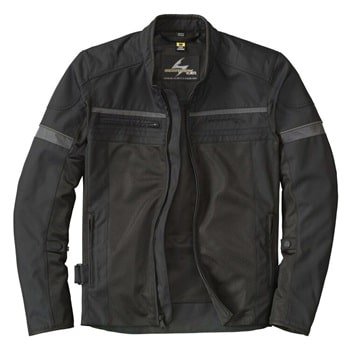
The Cargo Air functions as a lightweight mesh motorcycle jacket designed for summer and hot-weather use. Its shell consists of 600D polyester textiles in abrasion-critical zones, reinforced by Scorpion’s proprietary RhinoMesh exterior panels that provide high airflow while maintaining structural durability. The entire garment is assembled in Vietnam using polyester materials inside and out, including a soft interior mesh lining that remains comfortable against the skin during extended riding.
These materials avoid the coarse, abrasive texture sometimes found on lower-grade mesh jackets. The jacket includes Safe Tech/EXO-TEC CE Level 1 armor in the shoulders and elbows, along with a pocket for an optional CE-rated back protector, which is not included by default. The design targets hot-weather riders seeking significant airflow without sacrificing essential impact protection.
First Impressions and Sizing Notes
Initial inspection showed accurate sizing alignment with Scorpion’s published chart. The reviewed sample, a size Large, fit properly on a rider standing 6 ft (1.83 m) tall, weighing 180 lb (81.6 kg) with a 42-inch (107 cm) chest. Construction quality appeared consistent, with even stitching, smooth seams, and no loose threads.
One noteworthy commerce detail is the MSRP increase of $15 USD for sizes above XL. Although the jacket targets broad rider demographics, this pricing step may influence purchasing decisions for larger sizes. The fit presents a neutral cut that accommodates a range of body shapes without creating excessive pull points when seated on motorcycles with upright, sport, or forward-leaning ergonomics.
The lightweight structure also helps reduce fatigue on long rides by minimizing bulk. This passage establishes baseline expectations for riders comparing Scorpion’s sizing standards with their measurements.
Stitching Method and Construction Strength
The Cargo Air features Scorpion’s Exo-Stitch Safety Seam, a hidden internal double-stitch method that reinforces structural seams, including the main zipper track and other safety-relevant locations. This construction approach folds material over the internal stitching to shield the threads from abrasion and wear, increasing long-term durability. Stitching inspected across the garment appeared evenly tensioned and consistent.
The thread resembles nylon, offering tensile strength suitable for mesh-based protective apparel. These reinforcement techniques align with typical textile-safety practices for hot-weather jackets that rely on mesh for ventilation but require solid anchoring at stress points. The RhinoMesh material, claimed to be three times more abrasion resistant than standard large-gauge mesh, enhances overall slide protection despite its porous structure.
While laboratory verification was not conducted, the fabric’s density and rigidity suggest a deliberate balance between airflow and abrasion resistance. This construction analysis highlights how material layering and concealed stitching support durability in a high-ventilation chassis.
Ventilation Behavior and Heat Management
Ventilation represents the jacket’s defining strength. Air moves through the RhinoMesh material with little resistance, exceeding the airflow of comparable mesh jackets previously tested by the rider. Large mesh panels placed across the torso, sleeves, and back create uniform circulation even at moderate speeds.
The jacket includes no waterproof or thermal liner, emphasizing its singular purpose as a hot-weather garment. Light rain passes freely through the mesh, offering temporary cooling but no meaningful water protection. The shell is described as water-resistant rather than waterproof; riders requiring storm protection must carry a rain layer.
Airflow drops significantly during stationary traffic because ventilation requires motion, and the dark color options absorb solar heat. This passage clarifies the thermal performance trade-offs inherent in a mesh design tuned for maximum airflow rather than environmental sealing.
Integrated Cargo System and Backpack Mechanism
The “Cargo” name derives from the built-in expandable backpack stored in the large rear rabbit pocket. When deployed, the backpack attaches to the jacket using nine metal snaps—distributed between the backpack and upper-back attachment points. The bag measures approximately 21 in (53 cm) tall and 15 in (38 cm) wide.
Its exterior fabric is thin and stretchy, similar in texture to fine hosiery, while the interior uses a thin polyester layer to provide structure for the snaps. This construction differs noticeably from the jacket’s more robust materials. Riders may prefer to treat the backpack as a convenience feature rather than a primary carrying method, especially since Scorpion offers an optional reflective, water-resistant cargo-bag upgrade.
The built-in bag expands capacity for light touring but introduces safety concerns if hard or pointed items are placed near the spine without a back protector installed. This passage explains how the cargo system works and its limitations.
Interior Lining and Collar Construction
Inside, the Cargo Air uses a polyester mesh lining designed to promote airflow and prevent skin irritation during extended wear. This lining covers all interior storage pockets and the back-protector compartment. The collar follows a Mandarin design and does not cinch tightly, allowing air to move around the neckline—useful even on fully faired motorcycles where cockpit airflow can be limited.
Padding inside the collar increases comfort and maintains a stable shape when riding. The design avoids complex closures, relying solely on the main zipper to draw the collar together. This approach prioritizes breathability over weather sealing, consistent with the jacket’s intended climate conditions.
Storage Layout and Pocket Functionality
The jacket includes six main pockets: two exterior hand-warmer pockets, one exterior chest pocket, and two interior pockets, plus the large rear rabbit pocket that houses the cargo bag. None of the pockets are waterproof; all maintain open mesh interiors to preserve airflow. Riders carrying water-sensitive items should place them in protective sleeves or bags.
The hand-warmer pockets measure 7 in (18 cm) by 6.5 in (16.5 cm), offering useful storage for small tools or identification. The exterior chest pocket is smaller at approximately 5 in (12.7 cm) square, suitable for cards or toll transponders. Inside, the right side includes a zippered Napoleon pocket (7.5 in × 6.5 in), while the left side houses a hook-and-loop pocket of similar depth.
The rabbit pocket spans 15 in (38 cm) in width and 6.5 in (16.5 cm) in depth, accommodating the cargo bag or soft items that pose minimal injury risk. This passage details practical storage considerations for daily riding.
Branding, Hardware, and Color Availability
Branding on the Cargo Air is subdued, with a black Scorpion “S” logo on the upper back and small embroidered “Scorpion eXo” lettering on the chest and rear cargo pocket. Zipper pulls carry discrete branding, and hardware includes a mix of Scorpion-labeled and YKK zippers. Many retail listings identify YKK as the primary zipper supplier, known for consistent durability.
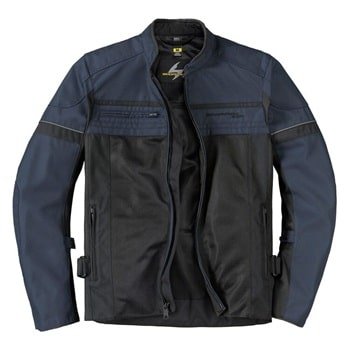
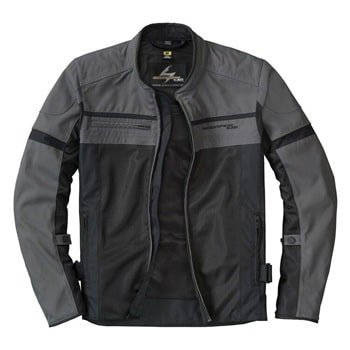
The jacket is available only in black and dark gray. These colorways reduce visibility in traffic and absorb heat more readily than lighter options. Riders seeking improved nighttime visibility may rely on the jacket’s NightViz reflective piping, featured on the shoulders and across the back in several product listings.
Fit Adjustments and Sleeve Construction
Adjustment features include hook-and-loop waist straps that thread through anchored loops, allowing riders to fine-tune torso tension. Forearms use dual-position snap adjusters to manage sleeve volume, reducing fabric movement at speed. Some versions also include small zippered gussets at the hem to increase room around the hips.
Sleeve cuffs close via zippers that measure approximately 4.75 in (12 cm) when fully shut. This creates a loose wrist fit that increases airflow but may expose skin when wearing short-cuff gloves. Riders preferring full coverage can wear gauntlet gloves that easily fit over the cuff due to the jacket’s low-bulk construction.
Safety Characteristics and Armor Behavior
The jacket incorporates Safe Tech Level 1 armor at the shoulders and elbows, supported externally by 600D textile overlays to improve abrasion durability during sliding events. The armor fits securely inside fixed pockets that do not offer vertical or horizontal adjustment. Placement proved accurate for the test rider, though individuals with different limb lengths may prefer to try the jacket on before purchasing.
The garment does not include a back protector, though it provides a dedicated pocket and Scorpion sells compatible CE options separately. Given the integrated cargo bag’s location, riders should avoid storing hard objects in the rear compartment without a back protector installed. Overall, the jacket balances ventilation and protection effectively for a mesh chassis, but its safety intent centers on street-riding scenarios rather than high-impact or track-level protection.
Intended Use and Practical Considerations
The Scorpion Cargo Air is engineered for summer and hot-weather street riding, with some flexibility for light touring due to its integrated cargo features. The mesh chassis, reflective elements, and optional accessory compatibility—such as Scorpion’s Transformer windproof hoodie designed for cooler conditions—extend its usefulness across varied temperatures, though it remains unsuitable for cold or wet environments without supplemental layers.
The jacket carries a commonly advertised one-year manufacturer warranty, depending on retailer and region. Riders prioritizing airflow, low weight, and simple storage integration will find the garment well suited to demanding heat. This passage closes the article by positioning the jacket within its practical riding scenarios.